

Let’s face it—how many utilities truly grasp what’s happening in their networks in real time?
More often than not, they rely on guesswork and lagging data. But that’s changing. Water and gas companies worldwide are recognizing the value of real-time data: detecting leaks before they become crises, allocating resources precisely where they’re needed, and transparently showing operations to the public. This isn’t science fiction—it’s happening now, driving tangible change.
So what’s driving this transformation? Smart metering and data analytics deserve much of the credit. They’re empowering utilities to shift from reactive firefighting to proactive management—and honestly, this change couldn’t have come at a better time.
Those old mechanical meters? They’re holding back.
You can’t manage what you can’t see. Traditional meters offer limited visibility, meaning problems are often discovered only after damage has already occurred.
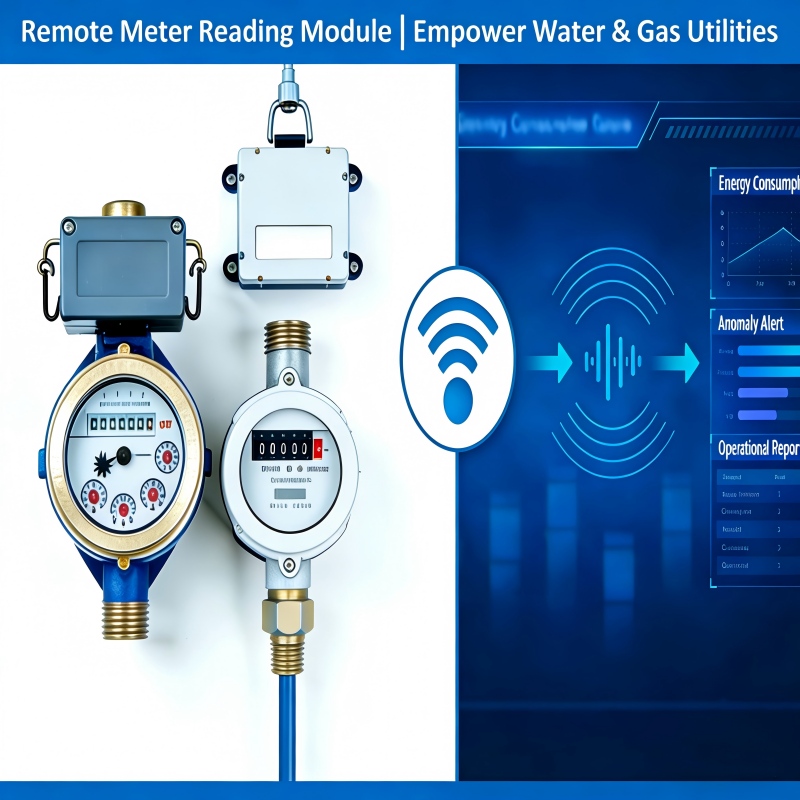
Remote meter reading pulse readers were born to solve this problem—and their principle is surprisingly simple.
Here’s where the Remote Meter Reading Pulse Reader comes in—and it’s surprisingly simple.
- No need to rip and replace. It retrofits onto existing water or gas meters in just a few minutes.
- Once it’s on, you get real-time data streamed straight to you. Remote collection, constant monitoring—done. And it’s built to work with the networks you already trust—whether that’s NB-IoT, LoRaWAN, or Lora.
- The transmission is rock solid. No dropouts, no guesswork.
Turning data into decisions.
- Those raw meter readings? They actually start to mean something. You get insights you can act on.
- That means catching inefficiencies, reducing waste, and running a tighter ship overall.
Going digital isn’t just about tech—it’s about trust.
- When your infrastructure is modern and responsive, people notice. It builds confidence.
- And honestly, it just feels better to lead with real data instead of gut feelings.
Post time: Mar-06-2026


