

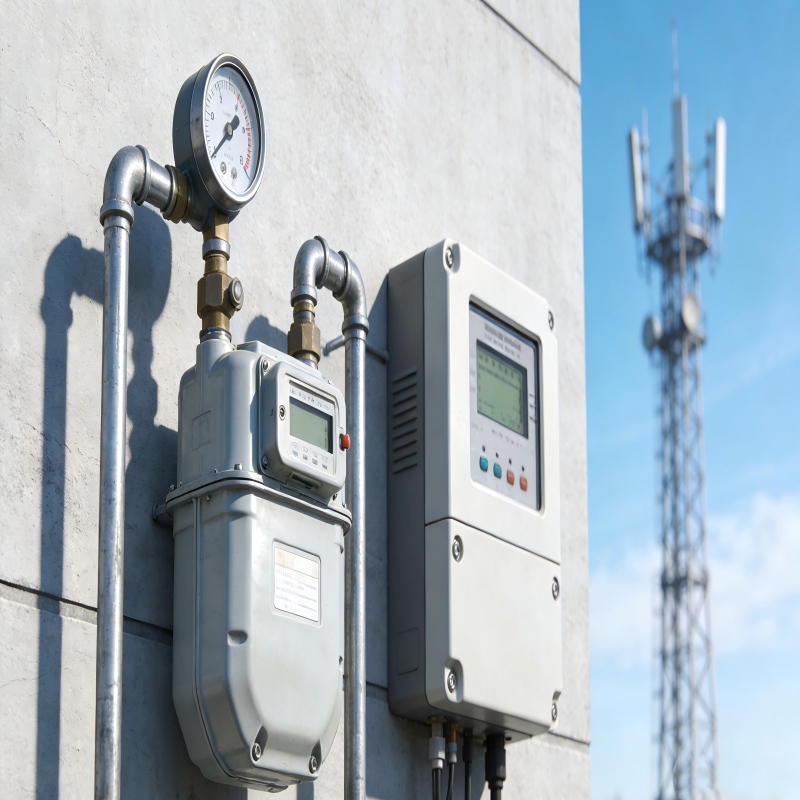
The digital transformation of Smart Metering is driven by IoT low-power communication technologies, solving the drawbacks of traditional manual meter reading. Below are the key points of how these technologies work and their benefits:
- Core Low-Power IoT Technologies – Low Power LoRaWAN: LPWAN protocol with long-range (up to 15 km in rural areas), unlicensed spectrum (no subscription fees), and ultra-low power (15-year battery life), ideal for remote areas.
- NB-IoT: Optimized for urban areas, licensed cellular network, reliable indoor coverage, low latency, high connectivity density, and 10-year battery life, suitable for smart cities.
- Key Supporting Devices & Solutions
- Pulse reader: Converts traditional meter pulse signals to digital data, transmits via LoRaWAN/NB-IoT, IP68 protection, 10+ year battery life, ensuring accurate real-time data.
– RetrofitSolution: Cost-effective upgrade for existing meters (no full replacement), installs IoT modules and pulse readers, reduces costs and disruption, supports future-proofing.
- Core Benefits of Low-Power Smart Metering – For utility providers: Lower operational/maintenance costs, proactive anomaly/leak detection, optimized resource distribution, improved grid sustainability.
-For end-users: Transparent real-time consumption data, reduced bills, accurate billing, seamless transition (via retrofit).
In short, LoRaWAN, NB-IoT, pulsereader and RetrofitSolution jointly empower low-power smart metering, transforming the metering industry towards efficiency and sustainability.
Post time: Apr-08-2026


